



[NMN Long-Term Use ③] NAD+ increases through intake of NMN!
General nutritional supplements that are not NAD boosters
Can we increase NAD levels?
.png?type=w860)
Hello, this is Rocket America.
In the previous long-term administration parts 1 and 2, we looked at the results of NMN's long-term administration clinical trial on humans.
.png?type=w860)
Click on the photo to go to the previous episode!
In this study, long-term NMN supplementation at 250 mg per day was well tolerated, did not cause adverse effects , and was shown to safely and effectively increase NAD+ metabolism in healthy middle-aged adults .
Furthermore, long-term intake of 250 mg of NMN per day can lower average blood pressure (baPWV) , reduce the risk of atherosclerosis, alleviate vascular stiffness, and reduce the risk of cardiovascular disease. Because NAD+ is essential for metabolic pathways, supplementing with NMN, a precursor to NAD+, is expected to improve metabolic stability and thus improve conditions such as cardiovascular disease. I've previously introduced a recent paper on NMN's role in vascular health, so I'd like to share it with you.

Click on the photo to go to the content!
Furthermore, it demonstrated improvements in cardiovascular risk factors in subjects with above-average BMI or blood sugar levels . Even if blood pressure is within the range considered healthy, relatively mild elevations in blood pressure have been shown to increase cardiovascular risk. Therefore, from a cardiovascular disease prevention perspective, controlling blood pressure at any stage is crucial, even if it is within the healthy range.
In conclusion, this study provides insight into the effects of long-term NMN supplementation on cardiovascular disease risk factors, including baPWV values, and suggests that further clinical trials would be beneficial to establish the benefits of NMN in reducing arterial stiffness.
Among these, there is one interesting piece of data.
“During the study period, the placebo group and the NMN intake group
“I took other supplements besides NMN !”
[summation]
Among the subjects who took other supplements concurrently during the study, the group that took NMN showed an increase in NAD+ levels.
NAD+, an essential coenzyme for our body, decreases with age and can be supplemented by taking NMN rather than other supplements.
Subjects continued to take any dietary supplements or medications they were taking before the study and avoided starting any new ones during the study period. Therefore, the proportion of people taking other supplements in each group was 35.1% and 32.4%, respectively. More than 10% of all participants took eight supplements (multivitamins, multiminerals, soy isoflavones, vitamin C, vitamin B complex, omega-3 fatty acids, lutein, and coenzyme Q10), and among them, the placebo group tended to take more vitamin C, vitamin B complex, and omega-3 fatty acid supplements than the NMN group.
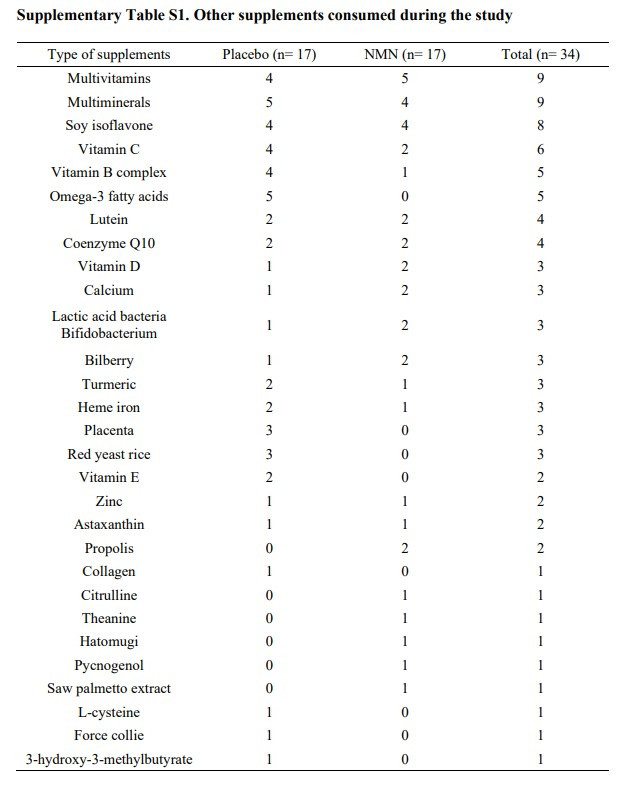
Table 1. Other supplements taken during the study
Can't regular supplements, other than NAD boosters, increase NAD levels?
In the table above, the ratio of N (placebo group/NMN group) who consumed omega-3 fatty acids is 4/1. While there were four subjects in the placebo group who consumed omega-3 fatty acids, only one subject in the NMN group consumed omega-3 fatty acids. However , it is noteworthy that the NMN group showed an increase in NAD+ levels .
Additionally, vitamin B3, such as NMN and NR, provides the building blocks for coenzymes like NAD+. On the other hand, vitamin C, which has a 4/2 N (placebo/NMN intake) ratio, acts as an antioxidant on its own without the need for coenzyme production, making it difficult to increase coenzyme NAD+ levels.
In conclusion, NAD+, which is an essential coenzyme for our body, decreases with age.
Rather than omega-3 fatty acids or vitamin C, you can supplement by taking NMN .
When N (placebo group/NMN group) who took vitamin B complex was 4/1,
Why did NAD+ levels increase only in the NMN group and not in the other B vitamins?
If you would like to know more, we recommend that you refer to the following article.

Click on the photo to go to the next part!
[References and Sources]

© All rights reserved to Rocket America. Any unauthorized use is prohibited.
#nmnlong-term use # nmnlong -term #nmnclinical #nmnnutritional supplements #nmnefficacy #NADbooster