



[Long-term NMN Use ②] Effects of Long-term NMN Use According to Vascular Condition
What are the effects of long-term NMN use depending on vascular condition?

In the previous article on long-term use of NMN, we analyzed research showing that daily intake of 250 mg of NMN safely and effectively increases NAD+ metabolism in healthy middle-aged adults without causing any side effects.

Click on the photo to go to the previous episode!
[summation]
Long-term intake of 250 mg NMN per day reduces mean baPWV values,
It showed improvement in cardiovascular risk factors in subjects with above-average BMI or blood sugar levels.
What is baPWV ?
Arterial stiffness can be assessed using brachial-ankle pulse wave velocity (baPWV) to predict cardiovascular disease.
Arterial stiffness refers to the stiffness of arteries due to decreased elasticity. The most important factor determining arterial stiffness is age. As we age, changes in the arterial wall tissue occur, reducing elasticity and increasing stiffness. Furthermore, increased blood pressure can increase arterial stiffness, as can other diseases, such as chronic heart failure, diabetes, and hyperlipidemia, as well as smoking and obesity. (Source: Pulse Transmission Velocity - Baek Sang-hong, Catholic University College of Medicine)
Next, let's understand the effects of NMN supplementation according to vascular condition .
Among the 34 subjects who participated in the study, 1) subjects with high vascular risk factors were selected and organized into subgroups, and 2) an analysis was conducted to determine whether NMN could reduce cardiovascular risk factors.
1) Screening of subjects with high cardiovascular risk factors
_(1).png?type=w860)
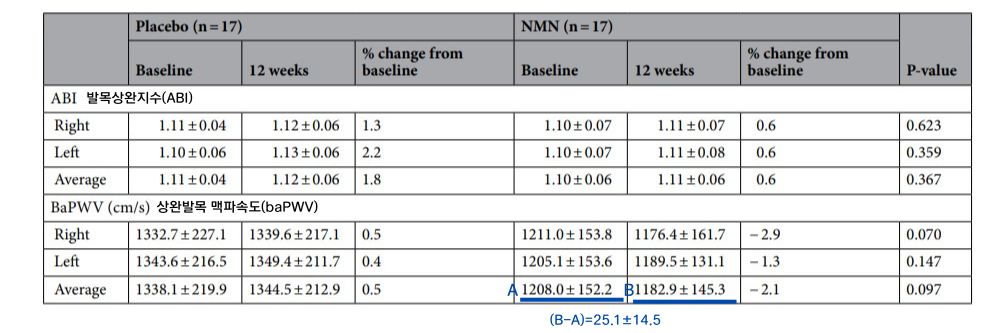
Table 4. Parameters for evaluating vascular function in the placebo and NMN groups before and after the intervention period (mean ± standard deviation)
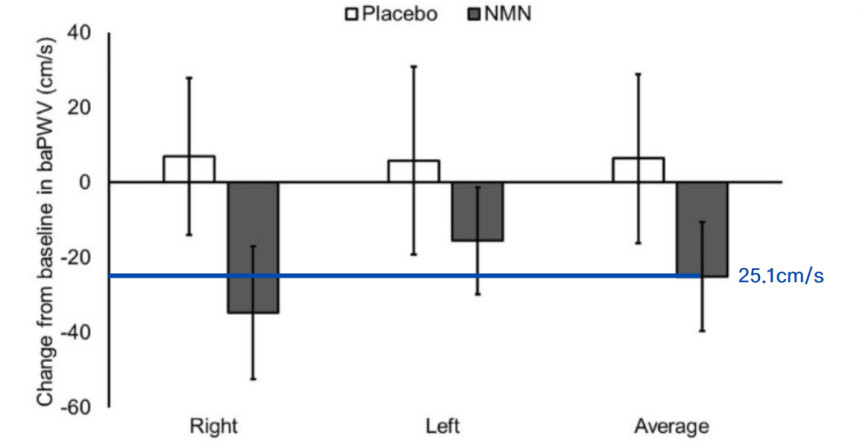
Figure 2. Changes from baseline in brachial-ankle pulse wave velocity (baPWV) after nicotinamide mononucleotide (NMN) or placebo supplementation (mean ± standard error).
As a result of evaluating blood flow and arterial stiffness, neither the NMN group nor the placebo group had characteristic clinical findings (Table 2, Table 4). The mean baPWV value in the NMN group showed a tendency to decrease by 25.1±14.5 cm/s (Table 4, Figure 2).
2) Analysis of the efficacy of NMN in subgroups with high BMI or blood sugar levels.

Figure 3. Subgroup analysis of NMN and placebo groups for baPWV (mean ± standard error)
(A) Subjects with above-average systolic blood pressure;
(B) Subjects with above-average diastolic blood pressure
(C) Subjects with above-average BMI
(D) Subjects with above-average blood sugar levels
Next, among the four subjects, those with above-average blood pressure, body mass index (BMI), or blood glucose levels, which may be cardiovascular risk factors, were analyzed. Analysis of subjects with above-average systolic or diastolic blood pressure revealed no significant changes in baPWV values between groups during the test period (Figures 3A, B). In contrast, in subjects with above-average BMI or blood glucose levels , baPWV values in the NMN group significantly decreased after the intervention period compared to the placebo group (Figures 3C, D).
These results are These findings suggest that NMN supplementation potentially improves vascular health in middle-aged adults, particularly those with higher BMI or blood sugar levels.
In conclusion, long-term NMN supplementation at 250 mg/day reduces mean baPWV values,
Improves cardiovascular risk factors in subjects with above-average BMI or blood sugar levels.
During the study period, the proportion of people taking other supplements in the placebo and NMN groups was 35.1% and 32.4%, respectively.
From the perspective of improving NAD+ metabolic stability by supplementing NMN,
If you would like to know more about what different supplement intakes mean for each group, we recommend reading the following:

Click on the photo to go to the next part!
[References and Sources]

© All rights reserved to Rocket America. Any unauthorized use is prohibited.
#nmnsideeffects #nmnlong-term #nmnclinical #nmnnutritionalsupplements #nmnefficacy #nmncardiovasculardisease