



[Health Information] Blue Light: A Modern Eye Health Concern

A student studying on an iPad all day long
Office workers who look at monitors all day
People who can't sleep because of their smartphones late at night
Have you ever experienced eye strain while using a smart device ?
As you finish your day, check out social media , read webtoons , or watch videos, doesn't the thought suddenly come to mind that ' using your smartphone late at night makes your eyes tired and reduces the quality of your sleep ' ?
Are you wearing blue light blocking glasses or wearing blocking film because you know that blue light, also known as ' blue light ' , disrupts the secretion of melatonin and disrupts your sleep cycle ?
It is simpler than you think to ‘fill the roots of nutrition’ to slow down eye aging and reduce stress caused by various reasons.
[summation]
Bilberry extract inhibited the aggregation of S-opsin and the activation of ATF4.
This suggests that bilberry extract may reduce damage to retinal photoreceptor cells caused by blue LED light.
0. Introduction
Long-term exposure to blue light (450–495 nm) damaged retinal photoreceptor cells (661 W) in rats .
Exposure to blue light causes the aggregation of short-wavelength opsins (S-opsins) and the activation of retinal transcription factor 4 (ATF4) . To prevent damage caused by blue light exposure, it is important to suppress oxidative stress in retinal photoreceptor cells by preventing S-opsin aggregation . This also includes inhibiting ATF4, which is one of the factors that causes S-opsin aggregation .
Bilberry extract contains 15 types of anthocyanins, which have the effects of antioxidant activity , promoting collagen biosynthesis , inhibiting platelet aggregation, and improving vascular elasticity , blood flow, and vascular protective activity . In addition , animal studies have shown that bilberry improves visual function , and clinical studies have shown that bilberry relieves visual fatigue . Natural foods containing anthocyanins have been shown to have a protective effect against light-induced retinal damage . Bilberry extract and its component anthocyanins protect retinal photoreceptor cells from damage caused by exposure to blue light-emitting diode (LED) light (λ max 464 nm) by inhibiting the production of reactive oxygen species (ROS) .
1. Effect of bilberry extract on S-opsin aggregation induced by blue LED light.
The anthocyanin content of the bilberry extract used in the experiment was 38.35% .
When 661W cells, which are photoreceptor cells of rats, are exposed to blue light of 450 lux for 6 hours, aggregation of S-opsin , a protein specific for photoreceptor cells, is induced . S-opsin tended to aggregate from 3 hours of LED exposure, and a statistically significant increase was observed when exposed to LED light for 6 hours . At this time, when bilberry extracts , i.e., Dp3G or Cy3G , were added, the aggregation of S-opsin was inhibited in a concentration-dependent manner . However, when Mv3G was added, the aggregation of S-opsin was only slightly inhibited, and the change was not statistically significant .

2. Effect of bilberry extract on ATF4 activation induced by blue LED light exposure.
Exposure to blue LED light causes S-opsin to aggregate, increasing ATF4 . To investigate the effects of bilberry extract and its active ingredients on increased ATF4 , photoreceptor cells from rats were exposed to 450 lux blue light-emitting diode (LED) light for 9 hours .
Treatment with bilberry extract or its active components (Dp3G, Cy3G , and Mv3G) statistically significantly reduced the level of ATF4 expression induced by exposure to blue LED light . Notably , Mv3G did not significantly affect the aggregation of S-opsin , but was effective in inhibiting the activation of ATF4 .

3. Results
In conclusion , we demonstrated that bilberry extract has a protective effect against blue LED exposure in rats .
Anthocyanins in bilberry extract protect a mouse photoreceptor cell line from blue LED -induced retinal photoreceptor cell damage . This was achieved by reducing the production of cell-damaging reactive oxygen species , focusing on its effects in regulating the activation of ATF4 and inhibiting the abnormal aggregation of abnormal proteins . Bilberry extract and anthocyanins may be useful health foods for the prevention of retinal diseases.
Rocket America's ' Care ' series
Rocket America's EYE CARE boasts a proprietary blend of three ingredients for dry eyes . It features bilberry extract, which protects against cell damage caused by blue light, along with pycnogenol and lutein . Formulated by doctors, pharmacists , and the Rocket America R&D team, the eye care formula is formulated to synergistically enhance the effects of each ingredient. It also contains vitamins A, C, and zinc, all of which help protect the eyes, making it an all-in-one solution .
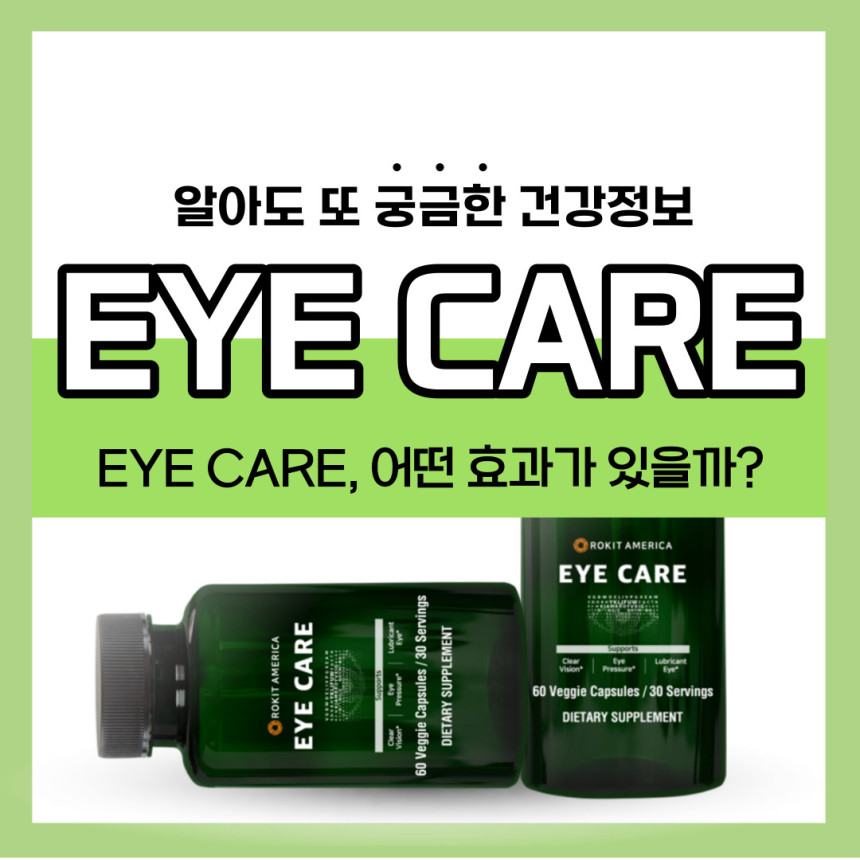
If you are curious about the EYE CARE synergy mixing ratio, click on the photo!
Also , Rocket America's STRESS CARE is a jelly formulated with 12 ingredients that are good for sleep and stress management . We recommend it to those who are anxious and realize that their dependence on sleep-inducing drugs has increased when melatonin, a hormone secreted when sleeping , is not secreted properly due to the influence of blue light . Stress Care is a safe product formulated with 12 raw ingredients that are good for sleep instead of melatonin, which cannot be imported into customs as a domestic pharmaceutical ingredient .
[ References and Materials ]
 © All rights reserved to Rocket America. Any unauthorized use is prohibited.
#BlueLightBilberry #BlueLightBlocking #BlueLightEyeProtection #BlueLightSupplement #BilberryBenefits #EyeStrain #DryEyes #MelatoninReplacement #HoneySleepJelly